
Gates of «Moments» Part Two
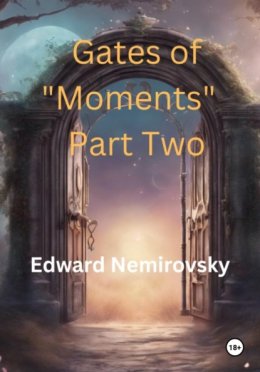
"What are you thinking about?" someone asked him. But Mark didn't answer; he was staring intently at a point. It grew every second, turning into a large black hole around which an ocean raged, flooding all remaining space, the darkening, gloomy sky. "Here they are, the gates!" Mark realized. "The name is written above: 'Moments', where two paths collide – the past and the future."
He heard the voice again:
"Enter these gates, my friend, and the question of everything: 'Do you want this again and again, countless times?' will weigh heavily on all your actions. If you say 'yes' to joy, you will also say 'yes' to all sorrows. Everything is interconnected…"
And Mark entered that space.
Chapter 1.
Mark's father's parental home, where they settled after moving, was in Kashgarka. It was a typical old district of a Central Asian city, with clay fences and houses. The windows of the houses faced only the inner courtyards, where it smelled of latrines and grass didn't grow because it was traditionally uprooted to leave the ground bare. Every morning, a young Uzbek woman swept the yard. Immediately after waking up, she usually covered her face with her hand as she was supposed to be ashamed of sleeping with her husband at night. So before starting her routine of sweeping the yard, she had to wash.
In these courtyards, trees grew, creating shade where topchans, covered with carpets and bolster pillows, were laid. Topchans were Uzbek table-beds where people reclined during meals or when receiving dear guests.
The age of Tashkent, as this city was called, where they moved to live, was over two thousand years. At the end of the nineteenth century, it was part of the Russian Empire, a province where high-ranking nobles who were displeasing to the royal family were exiled. For instance, Nikolai Konstantinovich Romanov, the grandson of Emperor Nicholas I, ended up in Tashkent.
Here, in the sunny land with fertile soil, an abundance of fruits, and rich wheat harvests from which rosy flatbreads were baked, many celebrities found temporary refuge. Some were exiled by the Bolshevik government after the 1917 revolution. Some fled from hunger, cold, others – from World War II. Alexander Solzhenitsyn, a Russian writer in exile and future Nobel laureate – an outstanding "Russian imperialist," nationalist, and anti-Semite, was treated in Tashkent for cancer. He wrote a famous novel about the suffering of his people in communist prisons and camps, revealing the crimes of Joseph Stalin. Solzhenitsyn, by the will of fate, became a victim of the communist regime, while Stalin, also an "imperialist," became a dictator and tyrant. Another Nobel laureate, Joseph Brodsky, a highly talented poet but with a rather vile soul, also visited Tashkent.
For some time, Konstantin Simonov, a Russian novelist, poet, and playwright with outstanding talents, lived in Tashkent. He told people the whole truth about the Patriotic War. Thanks to his efforts and contacts in literary circles, the world learned about Mikhail Bulgakov's immortal work "The Master and Margarita." However, Simonov himself did not heed the Master's wise advice given to the poet Ivan Bezdomny in this novel. The advice was: "Don't write anymore!" As a result, Simonov had to become a correspondent for the newspaper Pravda – part of the large Bolshevik lie and persecute writers who truly depicted the whole truth.
This city was visited by people with great talent and great soul – poet Sergei Yesenin, poetess Anna Akhmatova, director Solomon Mikhoels. People from all republics of the Soviet Union came here in search of warmth and bread, and some peoples, such as the Crimean Tatars and Germans, were forcibly exiled to these regions by Joseph Stalin.
This city also exiled former aristocrats and their descendants who failed to emigrate abroad. Former bourgeois, capital owners, and private property owners, that is, enemies of the people, also found themselves here.
But the main population of Kashgarka, where Mark's family settled, consisted of Ashkenazi Jews, immigrants from Ukraine and Belarus. They fled to the warm, bread-rich lands of Central Asia from pogroms, hunger, and poverty. Kashgarka somewhat resembled the poor districts of Odessa – chaotic, neglected courtyards, old sagging balconies, local quarrels, and scandals. It was also known for Jewish humor and Yiddish jargon, poverty, and the high intelligence of most of its inhabitants.
In such an exotic Uzbek-Jewish place, which arose where the Great Silk Road from China to Europe passed in the second century BC, Mark spent several years of early childhood.
Mark often visited Lusik, his elderly and incredibly overweight relative. Lusik lived with his Jewish mother, who loved him immensely, and his sixteen-year-old son Emanuel. His mother separated Lusik from his wife so she wouldn't get in their way. As they said in Odessa, "she moved their happiness."
Uncle Lusik, however, was not upset about this and was content with other joys. For example, he loved to eat deliciously. Mama Sonya cooked Jewish dishes well, and "stomach" happiness was always a celebration for him. Possessing an extraordinary intellect, Lusik, having finally broken off with women, enjoyed spiritual values. A feast for his soul was reading books, newspapers, and everything he could find in the Soviet press with its ruthless communist censorship. He had unique encyclopedic knowledge, and it was incredibly interesting to talk to him. Mark often went up to the second floor where Lusik sat on an old dirty balcony among scattered newspapers and books and left enriched with interesting facts, intellectual discoveries, and impressions of what he heard about poets, writers, composers, politicians, unusual people, or interesting historical events. Lusik was visited simply to chat, to talk about this and that by ordinary youth – school friends of his son Emanuel. Lusik attracted not only with his unique erudition but also with his ability to love those around him, sincere interest in them, attention without which you can't even communicate with pets.
When Mark visited him, the incredibly fat Lusik, delighted, would get up heavily from his chair, greet the guest, and then loudly and admiringly quote one of Mark's childhood statements about girls: "I hate girls! They are worse than Hitler and the Tsar!" So, Mark once declared to him. In this confession, Lusik was most amused and delighted by the comparison with the Tsar as a negative image. Being a very educated person, he understood all the stupidity and obscurantism of communist propaganda that even affected children's imagination. Considering his attitude towards the female sex, Mark's first impression of women sounded like wonderful music to him. "How beautifully said!" he repeated, laughing. "And exactly – worse than the Tsar!"
In this Uzbek mahalla, all the Jews knew each other. On the shabby narrow streets where Mark ran with local kids, old Jews often met him and, seeing little Mark, shouted to everyone: "Ah, this is Yosef's son!" An unfamiliar Uzbek woman, passing by, could lovingly pinch Mark's plump pink cheeks, as healthy and well-fed Jewish children have. You could observe an old Uzbek who unexpectedly spread a small rug in the middle of the road and began to pray right on the sidewalk. You often heard the cries of a junk dealer: "Old things, buy!" But the children especially liked when an old Uzbek with a long white beard, looking like a character from Persian tales, came in a cart drawn by a donkey, selling oriental sweets and exchanging them for empty bottles.
Yosef's father, Grandpa Arkady, who had long dreamed of a grandson, was now happy. He spent all his free time with little Mark, walking through the streets of Kashgarka and proudly showing his beloved grandson to acquaintances. Old Jews, shuffling along dirty sidewalks in house slippers, always greeted him with joy and special warmth. Everyone knew Arkady as a courageous and noble man who went through the entire war. He was externally handsome and physically very strong. But a head wound during the war did not go unnoticed – after a severe illness, Grandpa Arkady died, not having enjoyed communicating with his grandson.
Many years after Mark left this ancient district of old Tashkent, where he spent carefree time in childish pranks, Kashgarka would disappear from the face of the earth. A powerful earthquake would destroy the city, and the epicenter would be here, under this legendary place where the Kashgar Gates stood in past centuries, through which caravans entered the city from China. And where, in the twentieth century, the local Uzbek population sheltered those fleeing hunger, cold, and poverty – the "happy" citizens of the great communist country. The country of victors!
Over time, the people, inhabitants of this exotic place, will disappear too. The country – the great power that united citizens into a communist march to the happiness of all peoples on earth will also disappear. And these peoples will scatter to their ancestral lands, and they will hate each other, and they will turn to wars and barbarism, destroying all hopes for happiness, equality, and brotherhood. Obscurantists and liars will replace communists. And Satan will reign there!
But all this is yet to come! And now little Mark with his parents moved to another district of the city, where mainly Russian proletarians lived, in all their splendor and diversity. The "hegemon" that dominated during the revolutionary class struggle of 1917. Among them lived the descendants of former bourgeois and aristocracy exiled to these places. As a rule, it was a more educated stratum of society. For all, there was a huge yard the size of a stadium, with tall trees and lush green vegetation. People from simple families lived in houses with their small courtyards and toilets in the corner of the common yard. And the descendants of the aristocracy lived in a newly built four-story house with all conveniences and high ceilings, as they were built in Stalin's time. Large terraces were entwined with grapevines, the fruits of which could be enjoyed.
The common people treated their intelligent neighbors with respect, dreaming that their children would become equally educated. However, in the depths of their souls, they disliked them. The descendants of the former aristocracy treated simple people with some contempt. However, the residents of the large yard successfully coexisted, and the communist idea of equality and brotherhood temporarily united everyone into one big family, despite each having their own family history, traditions, material and intellectual capabilities. And most importantly, their unique genetic potential, a phenomenon not yet fully appreciated by science.
Here nine-year-old Mark walks in the yard. Neighbor girl Lyudmila approaches him. She asks Mark to talk to his mother: "Could I wash the floors in your house? We have no money, nothing to eat at home. Father drinks away his entire salary." Mark conveys her request to his parents, but they shrug and say: "What can be done for this family if their father is a chronic drunkard? And our floors are clean."
Mark spends the entire day running around the yard with Russian kids from humble and low-income families. Their parents work hard at the factory. They work as carpenters, locksmiths, laborers, drivers. Although many fathers often come home tipsy after work, the myth of universal Russian drunkenness is unfair. The children are very worried and embarrassed about their drinking parents, while the non-drinkers, in turn, despise neighbors who drink themselves into a state of degradation. Yes, exactly – degradation! Proletarians respect themselves, despite limited material and intellectual resources. Communist ideology supports their confidence that "poverty is not a vice," but rather a virtue.
Once among the children loitering around the yard, the conversation turned to Vladimir Ilyich Lenin. Someone explained that Lenin considered the poor the masters of life. Then little Petya, the brother of Lyudmila, who sought to earn a bit of money by washing floors, proudly said: "And we are poor!" And thereby he respected himself even more, despite the constant feeling of hunger. Mark was ashamed at the time that he lived in material prosperity: his mother was a doctor, his father a teacher.
But an even more serious accusation he often heard directed at him: "You are not only Jewish but also Armenian – the worst of the worst," Mark accepted this rebuke as deserved and didn't particularly worry about it. After all, his mother was indeed Armenian, and his father an Ashkenazi Jew.
But the neighbor in the yard Nyuska Penzina, a drunken forty-year-old woman, when she was drunk, and she was always drunk, yelled at little Mark: "You salty Yid! Fat-assed Armenian!"
And one day, when Mark was visiting his beloved relative, he asked him: "Uncle Lusik, what does 'salty Yid' mean? Drunk Nyuska always calls me that." Lusik's delight was indescribable! He couldn't stop laughing and exclaimed: "How brilliantly said! This is folk art. Only the Russian folk genius in a state of intoxication could come up with something like that!" Then Lusik explained to little Mark that Armenians are Orthodox but baptize their children in saltwater. However, this didn't stop Lusik from continuing to laugh.
And Nyuska Penzina didn't calm down. Mark's father was very popular with women because he was a handsome man. When Nyuska, always drunk, saw him in the large yard, she shouted: "I will rape you someday, Yosef. I'll corner you somewhere and rape you." All this was also part of the humor that, like rays of sunshine, illuminated the communal life in the large yard when everyone was young, cheerful, and full of hope. Even in this strange socialist experiment of equality and brotherhood, there was something that impressed and inspired.
Once, Mark accidentally found a collection of classical music records at Uncle Yakov's house, his mother's brother. Yakov's wife, Tamara, was a musicologist, and he was an engineer but had graduated from a vocal studio at the conservatory and even sang in the opera. Uncle Yakov often warmed up in the toilet – there was no other place, as his parents, wife, and young daughter all lived together in a three-room apartment. Their family was intelligent in every way, sharply contrasting with the proletarian contingent of the large yard. Mark enjoyed listening to records for hours when everyone was at work, and only the housemaid, a simpleton Lyubasha, was at home.
One day, Mark was sorting through records and playing excerpts. Suddenly, he froze, struck by a short musical theme of a few notes. He continued listening and was so captivated by the development of the motif that he listened to all parts of the symphony to the end. Mark fell in love with Beethoven's music, and later the music of other great composers, and this passion for classical music stayed with him forever.
Beethoven's Fifth Symphony changed his life, which seemed largely meaningless to him in the environment of communist ideology that didn't meet his childhood and youthful expectations. He felt that life should unfold before him like a tulip, and the music of composers from past centuries, not bearing the imprint of dirty proletarian hands, led Mark into its rich, genuine world, where he could immerse himself in true creativity and separate himself from universal dullness and obscurantism.
Once Mark asked his beloved Uncle Lusik which profession he liked most.
Lusik thought for a moment. And said:
"All professions are a yoke!"
"And your profession?" Mark asked.
Lusik taught economics at the university.
"Also a yoke," he replied.
"What about an engineer?"
"An engineer is a yoke too."
To any of Mark's questions, Lusik answered: "A yoke."
"But a composer is not a yoke," Lusik suddenly said.
And Mark thought… This conversation seemed to determine his future path in many ways.
The music school where little Mark was accepted to study was located in the Lenin Pioneers Palace. It was not a fake "palace," as envious communists liked to call simple buildings intended for the leisure of pioneers, but a real palace, built in Art Nouveau style and reminiscent of the era of powerful rulers of the Ottoman Empire – a one-story mansion of Grand Duke Nikolai Konstantinovich Romanov, exiled by the royal family from Petersburg and residing in Tashkent since 1881.
Around the beautiful mansion was a park with tall old oaks and fountains. Huge stone frogs surrounded small pools and, spouting streams of water from their mouths, filled them. Mark often sat astride these frogs and then bathed in the pool. Sometimes he collected acorns falling from the branched oaks or watched athletes who regularly trained in this park.
One day, Mark joined a group of running athletes warming up before training, using boxing equipment. They were all well-built.
Their coach, with a huge hooked nose and incredibly short stature, looked at Mark, who, with a thick rear end and plump cheeks, awkwardly ran after them, and sternly warned him: "If you bother us, we might hang you by your bottom."
Mark fondly remembered this comical episode, as he later learned that the hook-nosed coach who threatened him was none other than the legendary Sydney Lvovich Jackson, the champion of America in boxing. Born into a poor Jewish family in New York, he was raised in kosher traditions and even knew Yiddish. By a fateful coincidence, he ended up in Turkestan in 1916 and couldn't return home. He created the famous national school of Uzbek boxing and became an honored coach of the USSR.
This story sounds so fantastic that it's hard to believe it. The lightweight champion of America, Sydney Jackson, an American Jew, by the will of fate became a Soviet citizen and founder of the Uzbek boxing school, considered one of the strongest in the world.
Mark had many interesting and vivid memories of the palace. In summer, it opened as a pioneer camp – children slept right on the floor made of expensive wood, running barefoot with dirty feet through the rooms and halls decorated with incredibly beautiful oriental mosaics. Elegant Byzantine-style stained-glass windows with intricate patterns, floral motifs, and the use of gold and bright colors created an impression of luxury.
Before his death, the prince left a document stating that the palace, with all its contents, was bequeathed to the "beloved city of Tashkent."
The proletarians and their children took great pleasure in possessing such a valuable legacy of great culture from past centuries. However, this right was won by their grandfathers and expressed in the communist doctrine of "take," "divide," and "everything should belong to the people."
But over time, when Uzbekistan left the communist empire and returned to its national thousand-year traditions of feudalism, more specific and caring owners appeared for this palace. They turned it into a museum and began to carefully guard it.
But this will happen in the future, in the distant future. And at a time when everything still belonged to the people when after Stalin's death they no longer shot enemies of the people and party demagogues acquired somewhat human faces, the country experienced a flourishing semblance of democracy. The only period of warming when there were no wars and almost all the commandments of Moses were fulfilled to the "accompaniment" of the Communist Party Manifesto. Literature, cinema, music – all forms of art sang of humanism, equality, and justice concerning the Soviet person.
It was an "island in time" that many would remember as a truly happy period of Soviet life. For before that, there was a raging "ocean of time," filled with revolutions, repressions, wars, famine, and the trampling of human rights. And after this relatively happy and short period came a time of the rise of obscurantism and barbarism. Practices of "burning witches at the stake" and belief that the Earth is flat were revived. "Kremlin packs" and "wild terrorist gangs" roamed the planet.
But little Mark was fortunate to live precisely in that time which he later, many years later, recalled as a kind of earthly paradise behind the barbed wire of socialism. He had everything necessary for childhood happiness, and he began to engage in music, which enchanted him after acquaintance with the works of Beethoven and Grieg.
The classrooms of the music school where Mark studied were located in the building of the former stables belonging to Grand Duke Nikolai Konstantinovich, the owner of the palace. And in the palace itself, group events or choir classes were held, which Mark couldn't stand. He was placed with a highly experienced piano teacher – Berta Yakovlevna. She made him sing while playing the instrument, which he disliked. In general, she thought that Mark had no musical talent and often set as an example a talented neighboring orphan boy who studied with her. That boy had no instrument due to poverty and often ran to her, asking: "Aunt Berta, can I practice on your instrument?"
And little Mark was ashamed that he had everything but wasn't as talented.
"Why teach him music?" Berta Yakovlevna, the most experienced teacher in the school, asked his parents. There was a moment when Mark, despite his love for music, threatened to burn the home piano. But his mother insisted on continuing his studies; she was a pediatrician by profession but understood and loved classical music very much. She often sang arias from operas, as did her musical brother, Uncle Yakov, who warmed up in the toilet.
Eventually, Mark was transferred to another, less experienced teacher – Natalia Mikhailovna Nadezhdina. And a miracle happened! Mark began to study with pleasure and even compose small musical pieces, and at exams, his bright musicality in piano playing was noted. However, it should be noted that his passion for serious music was not always supported by his natural abilities, necessary for full realization as a talented performer. He listened to records with recordings of compositions by great composers for hours, imagining himself as either a conductor or a performer. It was like unrequited love of a short and not very attractive young man for a tall and beautiful girl who needs a suitable guy. The young man knows that with his physical data, he won't win her heart, and is simply happy that he can love her.
This discrepancy, this human drama with which God "rewarded" people, permeates all times, all epochs, and all conflicts.
But love and passion sometimes work wonders and realize themselves, breaking through in a different path, like streams of water in rocks.
For example, the love of the Italian poet of the Middle Ages Dante Alighieri for Beatrice Portinari, with whom he could not be together. To this woman, whom Dante Alighieri loved all his life and even after her death, he dedicated the "Divine Comedy." Perhaps he wanted to be with her, to unite with her at least in his imaginary world. This love created his immortal literary masterpiece, in which even hell "is created by the highest power, the fullness of all knowledge, and the first love."
Yes! The possibilities of love are inexhaustible! But the impossibility of realizing one's passion due to natural physiological shortcomings sometimes leads a person either to a feat or to a crime.
Mark believed in his star, and this naive illusion led him in the right direction. Naive illusions, despite their dramatic nature, often work wonders, like various religious beliefs that have preserved civilization and life on the planet.
Even unfulfilled dreams and hopes can have a positive influence and lead to unexpected results. Mark remained in such a state for many years. It was very dangerous, but some divine force protected him from personal catastrophe. Thanks to illusions, his life in this obscurantist society was more meaningful with motives and goals.
Natalia Mikhailovna, Mark's new teacher, was a very intelligent woman with a kind heart. She was the wife of the famous composer Boris Borisovich Nadezhdin, who made a significant contribution to the formation of the composer school in Tashkent. For his great merits, one of the city's music schools was named in his honor.
In general, the formation of musical culture in Uzbekistan under the influence of European musical traditions occurred quite unexpectedly. It was one of the rare but historically significant successes of the ideology of the communist regime.
After the Great Patriotic War, many outstanding cultural and art figures who were evacuated from Leningrad and other cities occupied by the Germans remained to live and work in Tashkent. In sunny and bread-rich lands, one could survive, create, and continue pedagogical activities, thereby preserving the valuable creative heritage of the European school and introducing it into the national cultures of Eastern countries. This marked the beginning of the flourishing of musical art in Uzbekistan and throughout Central Asia, which brought many interesting creative discoveries to the world.
Nevertheless, the "Marxist hairy paw of the communists" lay on this area of intellectual development of society, especially controlling and suppressing composer innovations and modernist styles. Innovations in classical music were not welcomed: they were considered the harmful influence of the West. Therefore, Mark was inspired by good old traditions, composing musical pieces that his friends liked.
He enjoyed visiting the Nadezhdins' home, where Natalia Mikhailovna engaged him in music.
Boris Borisovich usually had lunch at that time and sometimes, unintentionally listening to Mark playing scales with mistakes, joked: "He gets something like C-sharp flat major."
They had a large green yard where Mark loved to spend time with the youngest son of the Nadezhdins, Igor, who also composed music and was already studying composition with famous professors. Once Mark showed him his compositions, and Igor liked them. "There is both meaning and imagery in this music," Igor praised. "You see, you have above-average abilities," Natalia Mikhailovna rejoiced, encouraging Mark.
She always tried to create a positive aura around herself, her family, and her students. Their home was filled with intelligence and nobility, rooted in the aristocratic traditions of Russian families of the nineteenth century when European culture dominated in Russia. Thanks to this, masterpieces of Russian national art were created – painting, music, and literature.
Once after a lesson, Mark played chess with Igor in the yard where lilacs and cherries grew. A boy passed by them, seemingly unnoticed, silently. Mark looked at Igor questioningly, and he smiled: "This is my older brother Boris. We have only Borises in the family for centuries," Igor laughed. "He is preparing to enter the Moscow Institute of Physics and Technology, studying all day and completely absorbed in his passion – physics."
Boris, the eldest son in the Nadezhdin family, was very determined, always busy, and paid no attention to those around him.
Mark had to remember this modest, always self-absorbed youth many years later. It was a period of obscurantism in Russia, a period of the destruction of Russian civilization. Boris Nadezhdin, the son of that very Boris, with whose brother Igor Mark was friends in childhood, was a well-known political leader of one of the democratic parties and ran as a candidate for the presidency of Russia, and many Russians associated his surname with "hope." He tried to stop the "sliding avalanche of obscurantism" that had accumulated over the years of Soviet power. But the avalanche of socialist scum began to bury all of Russia, and it was already impossible to stop it. Nevertheless, Russian human rights activists in the West believed that politician Nadezhdin was a hidden protégé of the Kremlin and did not trust him. But Mark believed! He remembered his family – that aristocratic spirit polished by centuries-old traditions. He understood that it was from such families that the Russian intelligentsia would one day revive Russia and its spiritual values. Mark remembered his teacher Natalia Nadezhdina.
Many years later, various events of the past came to life in his memories, and the question arose: what of all this has the greatest value? Success in career and creativity, meetings with bright and talented people, romantic love adventures, or other significant events? No! He concluded that the most valuable are those people, teachers, who give us soulful light and knowledge, warmth, and paternal attention. And Natalia Nadezhdina lived in his soul as such a person and teacher, as if he had only parted with her yesterday.
In that distant period of childhood, in warm lands with bright sunshine, an abundance of fruits, flowers, and the rainbow illusions of communism, little Mark immersed himself in the world with all its shades of beauty and ugliness. He was passionately engaged in his creativity, and, apparently, genetics strongly influenced him in this regard, being a more significant factor than many realize.
"Why does he need this, Yosef, composing music?" asked Boris Abramovich, a relative of Mark's father, with a typical comical Jewish-Odessa intonation, scratching his balls. "Will Beethovens be needed in Uzbekistan?"
"Let him do something useful, not run around the streets of Pervushka with hooligans and drug addicts," Yosef replied.
But Mark was a curious teenager and managed to run through all the streets of the city, including Pervushka – it was a famous district, like Deribasovskaya in Odessa, and the oldest undeveloped sloboda in Tashkent.
They said that the area was called Pervushka since the time of the Russian merchant Pervushin, who in 1866 sent his son from Moscow to Turkestan. The son opened stores there, set up a distillery, and undertook the construction of many government institutions, including a military hospital and a church. The Pervushin company became the first investor in the development of production in the Turkestan region.
On the banks of the Salar River in Tashkent, a sloboda appeared where factory workers and railroad workers lived. Opposite the factory lay a vast caravanserai where visiting merchants from Russia stayed before market days.
Since 1950, Russian proletarians settled here, moving to warm and fertile lands where there was a high demand for labor. Their children grew up with Mark, and he adopted their habits and customs. Together with them, he ran through dangerous areas of the city and fell in love with their Russian girls.
Chapter 2
Yes! Love adventures – light, playful – already then stirred the imagination of children living in the yard. They matured quite early and plunged into their first romantic feelings. Probably, human nature required such early maturity and understanding of the essence of being. The eastern climate, an abundance of flowers, and the aroma of love in the hot air contributed to this.
Thus, the great poet Dante Alighieri was born in emotion-filled Italy, with the southern color of the surrounding nature. Therefore, it is not surprising that at nine years old, he fell in love. And his childhood love for Beatrice Portinari became a stimulus to create, years later, the immortal work – "The Divine Comedy."
However, Mark's romantic passions led to more prosaic and even dramatic events – harsh reality invaded life and controlled the fate not only of him but also of many of his young friends.
Often Mark saw in the yard a neat ten-year-old girl with slanting Tatar eyes and fair hair when her mom led her by the hand from music school. The girl held a music folder and always stuck her tongue out at Mark when they met – he responded in kind. It seemed this was their first reaction, the first clash of two little humans sensing some common energy field.
Attraction or conflict? Apparently, nature predetermined for them a natural attraction to each other, thanks to which the human race has not yet died out.
But this happened beyond their consciousness. Instinct?.. One could say so, although it sounds crude. What then? No one has yet properly answered this question, and I will not attempt it.
In any case, it is not romantic love like Dante's, and certainly not sexual attraction like most bipedal humanoids. Rather, an unconscious realm of the unknown, curiosity – that's probably what Mark felt in the first minutes of their meetings.
As a rule, girls mature faster. And Lara, as this ten-year-old girl was called, was the first to give a sign and show signs of a feeling resembling infatuation.
At that time, there was no internet, so the children used sign language. They quickly mastered the signs of this language and enjoyed communicating at a distance with gestures. For them, it was a game and entertainment.
Both of them lived on the top floor of a Stalinist four-story building. Below, under the lower floors entwined with grapes, small green gardens were outlined. Further, a large common yard was visible, covered with dense trees reaching the level of the highest balconies. Mark sometimes even had the temptation to fly a few meters and, grabbing the upper branches of trees, hang on them.
He loved looking at the world from the height of his floor, especially at night, when the darkening trees seemed mysterious and frightening, and the light-blue sky – fabulous from the sparkle of many scattered stars and the shining, like an angelic eye, moon. He often, falling asleep on the veranda, gazed into this enchanting space, promising something very good and kind, and listened to gramophone recordings of Haydn's symphonies. It was his favorite pastime on the veranda.
One day, Mark saw that Lara was looking at him from her veranda. When she caught his gaze, she began to speak to him in sign language. He understood her airy message to him. These were the words "I love you." This was the only expression in English that the children knew and often used playfully.
A strange, unfamiliar feeling caressed his heart and slightly excited him. He seemed to respect himself more and felt needed by someone else besides his parents. That is, he was already a person too!
Mark did not respond to Lara with the same love message but decided – now her feelings belonged only to him! And he behaved from that moment as the master of her childish soul; he wasn't thinking about the female body then.
However, Lara did not expect a reciprocal declaration of love from Mark, feeling his virginal naivety and inexperience. She was already mature enough to be aware of her feminine charms, and it was enough for her that she herself confessed her love to him. Now he belonged to her! So she thought. Her nature, inherently authoritative and frivolous, was already manifesting itself here.
And romantic, inexperienced Mark eagerly carried this new feeling that unexpectedly arose in his consciousness and completely captured him. He plunged into an unknown sweet world, about which everyone talks and writes, dreams, and creates works of art.
It is a world of great achievements, diseases, feats, and crimes. It is a world where the meaning of life is found and lost. This is what the Almighty punished Adam, Eve, and all humankind for, binding them in the chains of love and the slavery of passion.
Yes! Mark was in love!
When he, returning from school home, crossed the entire large yard, his eyes looked only upward. No, not at the sky. At Lara's veranda. He thought: maybe she's there now?
They often communicated with mysterious gestures from their verandas. And in the late evenings, they spent time by the fire, which they kindled from golden dry leaves and baked potatoes on it. It was a special, unique smell of smoke from autumn leaves and wonderful evening hours when all the children of the big yard gathered by the fire together and told each other extraordinary stories, played "stream" or other children's games. And inevitably, someone was in love with someone. Children's romances were born and disappeared like singing night crickets in the bushes growing everywhere in this large yard, and they seemed to chirp about the same.
All the children knew about Mark and Lara's infatuation and treated it with understanding, even with some reverence, despite their young age.
Fourteen-year-old Vitaly, who lived with his aunt because he had no parents, advised Mark to send Lara a love letter with poems he wrote especially for Mark. Vitaly, like many teenagers, was fond of poetry and composed poems, apparently having certain abilities and youthful creative fervor. The poem consisted of a set of high-flown words about love that he heard or read somewhere. He imagined the author of the poems as a knight in love with his lady heart, just as children fascinated by a game imagine themselves as captains on long voyages or pilots of spaceships.
But Vitaly himself was in love with another girl – Natasha. She was dark-skinned, pretty, and looked either like a gypsy or a Moldavian. Natasha was a few years younger than Vitaly and reciprocated his feelings. He promised to marry her when they grew up.
The most interesting thing is that all such relations between children were platonic, without any touch between them, and nevertheless were called love, bringing both pain and suffering and moments of happiness – all that usually accompanies true love.
Vitaly seemed like a leader among the children, as he was older and more confident in himself and his views on life, which form in a person simultaneously with growing up. He was engaged in boxing, trained yard kids in this sport, rode his motorcycle, and taught Mark to be brave and not afraid to tell the truth: "don't cheat like a Jew," as he expressed it, being under the influence of his proletarian environment.
However, he treated Mark with special sympathy, though his ideas about Jews were distorted by communist anti-Semitic propaganda. If he knew that the revolution, which brought rights to disadvantaged proletarians, was carried out by Jews together with Lenin; that the idea of communism was put forward by the Jewish dwarf Marx; that in World War II among the Heroes of the Soviet Union were one hundred seventy Jews; that in the church where their grandmothers pray every Sunday, all the icons are Jews; and that Sunday is the day of the resurrection of the Jew Yeshua, the Son of Man, then Vitaly would understand the entire drama of this people and, with his youthful noble impulses, would speak of them more delicately.
But for the most part, the proletarian children were primitive and with a certain plebeian tinge, often harmful, evil, and aggressive.
However, some turned out to be quite smart, capable, and believing in truth and justice. Their parents worked hard for low wages and dreamed of higher education for their children, as it elevated them to a higher social level, into better conditions of intellectual labor and life. In the country of communists, this was very important, and parents faced the main task of getting their children into institutes through connections and the favor of influential people. Few of them studied well in school themselves, although everyone wanted to live better. Most proletarians had no acquaintances or connections with influential people. Many very capable children could not realize their talents and remained on a lower social rung, like their parents.
One day, a neighbor organized a trip out of town for the children of their large yard. Mark’s parents forbade him to participate because the goal was to relax on the shore of an artificial sea, and the transport was an open truck. The organized group of children left early in the morning, and Mark, lonely and sad, sat in the yard when Vitaliy saw him from his yard, where he was boxing with a punching bag.
He approached Mark and asked:
– Why didn’t you go with everyone?
– I wasn’t allowed, – Mark replied meekly.
– But you wanted to go?
– Yes, of course! Very much.
– You must be more persistent and achieve your goals, – Vitaliy said. – Do you want to go to the sea on a motorcycle right now? We’ll swim and come back immediately.
– But it’s two hours away, – Mark noted.
– While everyone returns home, we’ll make it, – Vitaliy assured. – But we’ll achieve our goal. Tell yourself: ‘And went towards the sea!’ And sit in the back seat.
Mark obediently sat on the motorcycle, and they rushed to the sea, feeling like brave travelers. On the way, they had to stop: the chain came off. And while they were repairing the motorcycle, they heard squeals and shouts – the children from their yard were already returning home and noticed Mark and Vitaliy by the roadside.
– We’ll still achieve our goal, – Vitaliy said.
They reached the sea, quickly took a dip, and rushed back.
At home, panic had already begun. The returning children managed to tell that they saw these two brave travelers on the road. Of course, there was a big commotion and scandal in both Mark’s and Vitaliy’s families.
The next day, Vitaliy met Mark in the yard and proudly declared:
– We still achieved our goal. ‘And went towards the sea!’ – he proclaimed his slogan with pathos once more.
– Yes! – Mark agreed, like a faithful student sharing his ideas of courage and belief in justice.
However… Mark was more impressed by images of a different kind – not heroic; he loved to dream, listen to classical music, read books, and compose something, that is, engage in creativity.
Vitaliy’s native Russian soul, with his courage inherent to Slavs and his people, evoked deep respect and even admiration in Mark. But he found it all rather dull.
However, courage is inherent in any people when threatened with danger or destruction; in this, all peoples are similar. But in everything else, all nations, like people, are unique and diverse, which makes them interesting.
Of the Russian national values, Mark liked folk tales the most. Therefore, he loved to read fairy tales, for which his father scolded him, urging him to start reading more serious literature.
Mark constantly thought about Lara and eventually sent her a letter with poems composed for him by his ideological inspirer Vitaliy.
Of course, the letter ended up in the hands of her parents, but they treated the poetic confession with understanding and respect. Moreover, they began to hope that someday, perhaps, Mark would be with their daughter. They liked him because, unlike the primitive courtyard children, he was intelligent and engaged in creativity.
Lara’s mother had no education and worked in a kindergarten, while her father, also uneducated, took orders as an artist: he painted advertisements, posters, and the like. He loved to drink with fellow artists but behaved modestly and with dignity. They were one of the simple Russian families with a very delicate and noble soul.
Once, Lara’s father, a bit tipsy, came to Mark’s mother. She opened the door and, in the official tone of a pediatrician, said: «I’m listening to you». He was confused and stood silently, unable to utter a word. Apparently, he hadn’t thought in advance how to say that he and his wife would like their daughter and Mark to be friends. After a few minutes of silence, he simply turned around and left. However, even a more educated and sober person would find it difficult to find the right words to express such a delicate wish.
In the future, Mark often recalled this strange and comical visit, as everyone’s life turned out to be so dramatic that Lara’s father’s behavior was probably explained by his paternal intuition – some wise and anxious foreboding of future events and even tragedies. Mark was unlike the simple guys surrounding their daughter; he had refinement and blue blood. But their dream that Lara and Mark would remain together was not destined to come true.
While the intelligent, dreamy Mark was running after Lara, she, responding to his feelings, increasingly realized her power as an attractive girl and showed more and more interest in other guys who were older, more confident, and had a Russian soul and courage. Mark was very appealing to her externally, but she was already drawn to something new, unexplored, more muscular and manly. To say – «manly»? That would be too lofty for such girlish inclinations.
Once Mark returned from school and looked into Uncle Yakov’s garage. The garage had an exit to a small inner courtyard where Uncle Yakov kept pigeons. He often let them fly. His pigeons had become lazy from the excessive care of their loving owner and, after flying one or two circles in the sky, landed on the roof of the high-rise building, right above the veranda where Mark admired the fairy-tale eastern sky every night.
Uncle Yakov, being a leading pedagogue of the institute, an associate professor, and head of the department, behaved like a child when fussing with pigeons. He even threw stones on the roof like a courtyard prankster to make the birds rise into the sky. Pigeons, like people, from excessive care and kindness, degenerate, grow fat, and lose their ability to fly.
Stones fell on the roof of a neighboring apartment where two elderly women lived – twin sisters with the surname Talskys. In the past, they were famous doctors, descendants of former aristocracy, fate cast them into these Asian lands, they lived together all their lives and had neither family nor children. The Talskys sisters were angry at Uncle Yakov because his pigeon chasing spoiled their slate – the roof covering over their apartment; outraged by his behavior, they said he had a disease of infantilism – immaturity in development, although he was a pedagogue and lectured at the institute, and even on educational TV channels.
To avoid angering the intelligent old ladies, at Uncle Yakov’s request, Mark sometimes climbed onto the roof and chased the pigeons with a long stick with a red flag on it through the attic. And this time he climbed into the attic and for a while didn’t let the birds land on the roof; the pigeons circled in the clear, cloudless sky for a long time. «Why are they so lazy?» Mark thought. «How much I would give to fly in this endless space».
As he descended, he met a neighbor girl on the landing. «And your Lara secretly talks with Yurka on the other side of the house so that no one sees them», she tattled to Mark.
His heart turned to stone and plummeted into the abyss. He paled and headed to the street, which overlooked the backside of the high-rise building. There he saw Lara and Yurka. They were cooing like doves, leaning out of their windows up to their waists. Their apartments were close to each other.
Mark waved the stick he had just used to chase the pigeons, and apparently scared them off too. Lara, startled, quickly shut the window and disappeared. Yurka, angry, also hid behind the window. He was a few years older than Mark, physically stronger and taller; he probably also fell in love with Lara.
From that time, Mark often noticed their love «cooing». They peered out of their windows on the backside of the building so that the neighbors wouldn’t see them and conversed. For a while, Mark pestered Lara with claims, but his jealousy bored her. Once, in a fit, he grabbed her by the hair, and she slapped him. «I love him!» she declared angrily. After this incident, Mark cursed her with all sorts of words.
Older guys, a few years older than him, once asked Mark:
– Well, do you still love her?
– She has such a beautiful figure! – one of them said admiringly, clearly to tease him.
– If I see her naked, I’ll immediately stop loving her, – Mark declared categorically.
He imagined her naked and was horrified that his romantic image of Lara was so disfigured.
Their enthusiasm knew no bounds. The older courtyard guys laughed for several days, retelling this revelation of the dreamy Mark to each other.
At night, on his veranda under the open sky, Mark couldn’t stop thinking about Lara, and for some time didn’t listen to Viennese classics.
The time had come to descend from this light-blue fairy-tale sky, where stars are scattered like pearls, to the ground where insects crawl and people live. Yes! God’s laws exist, but not there, not in heaven, but on earth. And these laws are determined by the Almighty, not by our desires. And we are elementary particles subject to these laws. If we wish to create our world of being and become gods too, well – that is also possible, and it is part of His divine plans. And Mark had to come to terms with these laws, and as a result of this humility, he gained the ability to create his own world, in which he too might someday become a god.
Chapter 3
In the summer, Mark was sent to a pioneer camp – somewhere far in the mountains, among green forests and fast cold rivers with the purest water, children spent the whole summer. And it was free, like many other social benefits in the land of the communists. A vast country occupying one-sixth of the land could afford this, as the state took almost all of the money earned by the Soviet worker into its budget, leaving the person only the minimum that allowed them to live modestly. This means everyone equally. But at the same time – from each according to his ability. True, there was some difference in income between people with higher education, ordinary workers, scientists, and artists.
In this «neofeudal pyramid» of the socialist state, party officials had more privileges than ordinary citizens, and this likened them to the «noble grandees» of past centuries, with whom their communist grandfathers fought so fiercely. There were pioneer camps for children of high-ranking party workers. For example, «Artek», located in Crimea on the Black Sea coast, in an amazingly beautiful place. Getting there was possible only by special order of ruling figures – party leaders. But Mark’s parents belonged to the Soviet intelligentsia and had no special privileges. Therefore, the place where Mark found himself that summer was a pioneer camp for the children of ordinary workers, mostly workers of an agricultural machinery plant, that is, proletarians.
After Lara’s betrayal, Mark decided to descend from heaven to earth. His first desire was to get rid of excess weight – to lose weight and become slim. Children often teased him as a fatty. The standard of an adult man for proletarians is a muscular athlete with a hammer in his hands, and the standard of a teenager is a skinny, hungry, and poor boy. Mark didn’t fit this image and looked like a foreigner among the children of proletarians. His plumpness, grooming, slightly swarthy skin, and intellectual features of the face irritated them, and sometimes even aroused hatred.
To lose weight, Mark chose an original way that could only come to a child’s mind. In the pioneer camp, friends liked to play table tennis for food: the loser gave away their portion during dinner or lunch. Mark deliberately played tennis with stronger players, guys older than himself, and often lost, remaining hungry. Sometimes he lost not only lunch but also dinner and came to the dining room at a non-lunchtime to ask for a piece of bread, as there was nothing else to eat at this time. As a result, he quickly lost excess weight and confidently moved towards his goal.
But his decision to transfer to the first squad, where there were older guys, turned out to be not the most successful. He was hoping for communication with more interesting and intellectually developed comrades. He dreamed of participating in their sports games. However, his desire was ambitious and absurd.
The first squad consisted of teenagers fourteen to sixteen years old, with pimples – «hottentots» – already appearing on their faces, and their view of the world became greedy, aggressive. Except for a few modest and good guys, most of the teenagers were evil and unfriendly towards Mark. They constantly fought and treated each other little better than wild animals. Authority for them was strength and rudeness. Many had known each other for a long time, as their parents mostly worked at the plant and, apparently, communicated. Mark was a foreigner among them in every respect. However, he was not taken into the football team not for this reason: he simply played football poorly, although he loved this sport and dreamed of playing in their team. He sometimes imagined himself in a beautiful blue football uniform and light blue socks.
Each squad had pioneer leaders aged twenty years. If the squad was male, it would be a guy, and if female – a girl.
Every morning, the bugler woke the entire camp by playing a fanfare with a red flag attached. Then everyone lined up for a roll call, that is, distributed by squads on the parade ground. It all looked like in the army. The leaders of each squad reported to the chief pioneer leader of the camp that squad number so-and-so was lined up for roll call. And this also resembled the army. Then the camp director spoke, giving various orders. After that, to the performance of the state anthem on the bayan, a red flag was hoisted on a tall pole as a symbol, and the squads of young pioneers dispersed to their pavilions to the beat of a drum.
All activities in the camp, including entertainment and sports, had a militarized character. It created the impression that someone might attack the fairy-tale country of the communists, as if enemies surrounded it on all sides.
In addition to table tennis, Mark loved billiards. Once he joined a group of guys playing «knockout», that is, the defeated one leaves the game, and the winner plays the next game with a new opponent. Born under the sign of Sagittarius, known for its accuracy and excitement, Mark played billiards well.
Suddenly, Valery Sergeyevich, the pioneer leader of the first squad, came in. He looked pale and angry. The guys parted and cleared the table for him. For a while, he gloomily walked around the table alone and pocketed balls.
– How are you feeling, Valery Sergeyevich? – Vera from the second girls’ squad asked him sympathetically. – Maybe bring you some water to drink?
Valery Sergeyevich silently and lazily walked around the billiard table, looking for a convenient angle to pocket the ball. He had just returned from the hospital after an appendicitis operation, so he was in a bad mood. All the children reverently watched how skillfully he pocketed the balls. They felt sorry for him: after all, he had undergone such a serious operation. And Valery Sergeyevich felt like a hero somewhere in front of the surrounding children.
He soon got bored playing by himself, and he announced:
– Tomorrow, in our camp, they are showing the movie «Son of the Regiment», be ready. And tell the others.
– What’s the movie about? – asked a boy named Andrey with a non-Russian accent. He was Greek, so the guys often made fun of him.
– About how in the forest, in a shell crater, Soviet artillery scouts found a ragged, hungry peasant boy Vanya Solntsev and took him with them to the artillery regiment, – Valery Sergeyevich explained and immediately left.
And Mark decided to wait not for the hungry and ragged Vanya Solntsev but for the moment when the real sun went down over the horizon to swim secretly in the pool when it became dark and no one would see him. He was joined by the Greek boy Andrey. When the sun set, they both swam, laughed, and splashed in the cool water, enjoying the view of the starry night sky above their heads. The warm air gently enveloped their bodies, creating a feeling of freedom and carefreeness. They told each other about their interests. Andrey entertained Mark with stories from ancient Greek mythology, and Mark shared funny incidents from his life and his creative plans in music. At that moment, they felt not only friends but also part of something greater – eternity, where there are no borders and barriers. They got out of the water and, sitting on the edge of the pool, began to contemplate the night sky, dreaming of adventures that awaited them ahead.
Well, the adventures didn’t take long to wait. Their happy laughter and splashing water, mixing with the wind, reached the ears of the red-haired Svetlana, the leader of the girls’ squad. In a gazebo hidden in the night silence, she was hugging the projectionist, who sometimes showed movies in the camp.
When Mark and Andrey returned to the pavilion and went to bed, no one noticed them. But in the morning, after the general line-up on the parade ground, the pioneer leader of the first squad, Valery Sergeyevich, lined up all the guys and announced:
– The first squad is deprived of watching the movie «Son of the Regiment» today. Everyone is punished!
A murmur of disapproval ran through the line, voices were heard: «Valery Sergeyevich, what for?»
– Two from your squad were swimming in the pool after lights out, – he said, peering into the faces as if trying to identify the offenders.
– Who are these Judases? – voices were heard from the crowd.
Mark’s heart went cold, and his knees went numb.
– Were there many Judases? – Andrey asked him in a whisper; he seemed not to quite understand what was happening.
– They probably think that since all Jews are Judases, that’s why they call them Judases, – Mark suggested.
But Andrey, a bit more versed in the biblical story, since his parents were religious people, asked:
– But Jesus was also a Jew, so he’s Judas too?
While the children unsuccessfully tried to figure out the New Testament, the red-haired Svetlana entered the pavilion with a sly smile on her face; she looked carefully, with some sweet pleasure, now at Andrey, now at Mark.
– So is it them? – Valery Sergeyevich asked her.
Svetlana nodded with satisfaction and left.
– Because of these two discipline violators, everyone will be punished, – Valery Sergeyevich said strictly, pronouncing the last words as a verdict, understanding what would follow.
An air of inevitability hung in the air. Valery Sergeyevich immediately left, clearly not to interfere with the reprisal of the guilty. As soon as he left the pavilion, someone punched Mark hard in the nose, and his nose bled. Meanwhile, Kolka, the oldest, was beating Andrey with his large fists. Mark didn’t wipe the blood off his face so that any of the avengers who wanted to beat him would see that he, like the first Judas, had already been punished.
And indeed, when Kolka searched for Mark with his eyes, he asked: «Where’s this Armenian bitch?» – and, seeing him bloody, calmed down. «You’ve already been given, you bastard», he said with satisfaction.
Andrey’s parents came to visit the next day. Seeing him bruised, they immediately took him from the camp with a big scandal. The camp director summoned Valery Sergeyevich and gave him a serious scolding. Mark didn’t like to complain, so he said nothing to anyone.
But Mark didn’t dwell on the negative moments of life in the camp. He was attracted to Russian girls, especially simple ones. Apparently, he had read enough Russian folk tales. He no longer thought about Lara but began to notice Vera from the girls’ squad. He showed interest in her, but she treated him with contempt because he was slightly swarthy, either Jewish or Armenian, and still chubby.
Every morning the children washed and brushed their teeth on the bank of an aryk – a narrow but deep canal near the camp. One morning, Mark bent down to scoop water into his hands and felt a kick in the back. The push sent him into the water. He swam well and quickly climbed ashore. Several guys stood by the aryk and showed by their appearance that they didn’t know who pushed him. He thought someone was joking at his expense for fun and bent down for water again. Again followed a push in the back, and Mark ended up in the water again. Climbing ashore, he asked indignantly: «Who’s doing this?» But everyone insisted: «It’s not me, it’s not me». Mark was used to their rude behavior, but this seemed too harsh even for him. He approached the water for the third time to rinse his toothbrush and again flew into the aryk from a push. All those standing on the shore shrugged – they didn’t know who was doing it.
A lanky guy in glasses with a square face – brother of the very Vera who Mark liked – extended a hand to him as if to help him climb out of the water. And when he pulled Mark out, he pushed him back into the water. This already looked like some kind of sophisticated reprisal, a lynching.
– Why?! – Mark exclaimed offendedly.
– For my sister! What did you say about her yesterday, you bastard?! – said the lanky guy with a furious expression on his face. It’s hard to describe the hatred with which he looked at Mark. Such hatred doesn’t arise instantly but has roots going back to the distant past.
– When? – Mark was surprised.
– During the dead hour, – he said angrily. That’s what they called the children’s daytime rest in pioneer camps.
Mark began to remember what happened yesterday during the day’s nap. Yes, he said something, referring to his sister, but didn’t mention her name. He remembered something like: «And my chick is having fun now». He was just practicing slang he picked up from older guys.